
Menu
Vidalux Electric Shower Cabins: Is Electric the Right Fit for You?
By admin | Uncategorized
By admin | Uncategorized
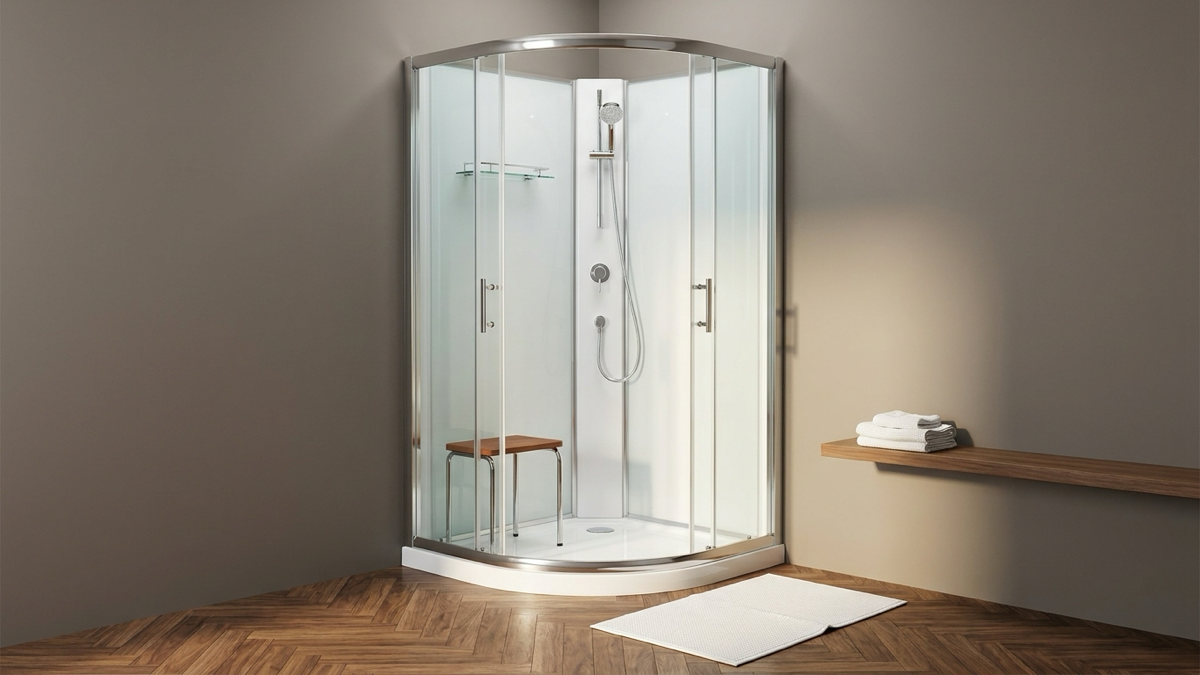
Choose a Vidalux Pure E electric shower cabin when your hot water supply is weak, shared, unpredictable or you only have a cold water supply. It heats the cold-water feed on demand, working independently of your boiler or tank. Skip it if you want steam or massage jets, or you already have strong, reliable plumbed hot water; a Hydro cabin suits you better then.
You’ve found the Pure E range and it looks like the fix for cold only or a weak hot-water supply… but “electric” isn’t automatically right just because plumbed hot water is your problem. Read on and you’ll know whether it actually fits your bathroom, or whether plumbed or steam suits you better: what Pure E solves and can’t, where electric is genuinely right, and what it costs plus what to check with your electrician first.
A Pure E cabin isn’t a smaller, cheaper plumbed shower. It’s a different category, built to answer a different problem.
Pure E is cold-water-feed only. A Triton electric shower unit, 8.5kW or 9.5kW, heats that cold water on demand as it passes through, rather than drawing hot water from a boiler or tank. Leak-Seal™ technology guarantees the cabin leak-free and lets it go in against untiled walls.
Q: Is a Pure E cabin just a cheaper plumbed shower?
A: No… it solves a different problem. A plumbed cabin needs hot water reaching it already; Pure E makes its own.
Here’s what actually matters: Pure E can prevent leaks entirely, replace the need for tiling, and provide safe, thermostable electric showering. It cannot produce steam, provide hydrotherapy or massage jets or chromotherapy, or offer digital entertainment features. Worth knowing now, not after delivery.
The cold-water-feed mechanic itself… how the Triton unit heats water on demand, and what Leak-Seal means for installation… is covered in full here if you want that depth first.
Once you know what Pure E actually is, deciding whether it’s for you takes three honest questions, not a spec comparison.
Q: Does electric mean settling for less?
A: Not if one of those three is your situation… you’re solving the problem you actually have.
Buy for the room you’ve got, not the one in the photo. Our full guide to getting the size right covers footprint once electric’s confirmed as the right category.
This is the honest bit: Pure E isn’t the right answer for everyone on this page, and it’s worth saying so before you order.
If you want steam, or hydrotherapy and massage jets, Pure E cannot do either… that’s a Hydro or Steam cabin’s job, however good the model looks in a photo. And if your bathroom already has strong, reliable plumbed hot water and good pressure, a plumbed cabin gives you the wider feature range without Pure E’s cold-feed constraint at all.
If your hot water’s fine, electric’s solving a problem you don’t have… save it for the bathroom that actually needs it.
Still working out which category is genuinely right? The full electric vs plumbed vs steam breakdown covers the three-way comparison from scratch.
Running cost is a fair question to ask before you commit to a category.
Between the two Pure E power options, 8.5kW is the more economical, with lower running costs; 9.5kW trades some of that for more powerful flow, preferred for main bathrooms with several daily users. That comparison is Vidalux’s own.
General market context, not an SPW or Vidalux figure: running an 8.5kW electric shower continuously for a full hour costs roughly £2-£2.60 at current UK electricity rates, from published UK energy and appliance cost guides, not anything SPW measures itself. Most showers run 5-10 minutes, not a continuous hour, so the real cost per wash is a fraction of that headline figure.
Worth knowing… the 8.5kW-vs-9.5kW comparison is the only running-cost fact SPW can put its name to; the £-per-hour figure is general market colour, not an SPW claim.
Two things decide whether a specific Pure E model works for you, and neither is which one looks best in the photo.
The live Pure E range runs from an 800×800mm square configuration up to 1200×800mm, across square, quadrant and offset shapes… covering a tight en-suite as well as a family bathroom. The Pure E 900 sits mid-range, as a worked example. Size is decided by your actual floor space, not the gap the old shower left.
Q: Is 700mm too small for a walk-in shower?
A: It can work in a tight space, but Pure E’s own smallest live configuration starts at 800mm… check your actual clearance, before a size rules you in or out.
Every electric shower’s mains connection is notifiable, Part P electrician work, whichever model you choose. Per GOV.UK’s Approved Document P, that’s the current building regulation covering electrical safety in dwellings and when notification is required. Electrical Safety First is direct about what that means: an electric shower “must be installed by a registered competent electrician and be supplied on its own circuit”. Book that electrician before you order, not after and confirm a fitting date once you know when the shower is being delivered.
Smart Price Warehouse is family-run, and in its own words is one of the longest established re-sellers of steam and shower cabin products in the UK.
Browse the live Vidalux Pure E range if a weak or cold-only water supply, a second bathroom, or a fast self-build swap is genuinely your situation. Still weighing electric against the wider category? The wider shower cabins range covers plumbed and steam options side by side.
Q: Are Vidalux shower cabins any good?
A: Vidalux is one of the ranges SPW has stocked longest, across plumbed, steam and electric cabins. Whether one’s “good” for you depends on fit: for a weak or cold-only water supply, the Pure E electric range solves a specific problem a plumbed cabin can’t.
Q: How much does it cost to run an electric shower for 1 hour?
A: Running an 8.5kW unit continuously for a full hour costs roughly £2-£2.60 at current UK electricity rates. Vidalux’s knowledge base notes 8.5kW as the more economical of its two Pure E power options. Most showers run 5-10 minutes, not an hour, so real cost per wash is much lower.
Q: Are Vidalux showers suitable for small bathrooms?
A: Yes… Pure E’s smallest live configuration is 800×800mm, running up to 1200×800mm, covering a tight en-suite as well as a family bathroom. Right size depends on your actual floor space, not the gap the old shower left.
Q: Is a 700mm shower too small?
A: It can work in a tight en-suite, but most find 800mm the safer minimum, especially with a narrow door opening. SPW’s smallest Pure E configuration starts at 800×800mm… check your clearance before it rules you in or out.
Q: Are shower cabins in general any good?
A: Shower cabins solve two real problems: no tiling and no leaks, because the whole unit is one sealed enclosure once assembled. Vidalux’s electric Pure E range adds hot water on demand for a weak, unreliable or cold only supply… it’s a fit for that specific problem, not a universal upgrade.