
Menu
Shower and Steam Room Combos: What You’re Actually Buying
By admin | Uncategorized
By admin | Uncategorized
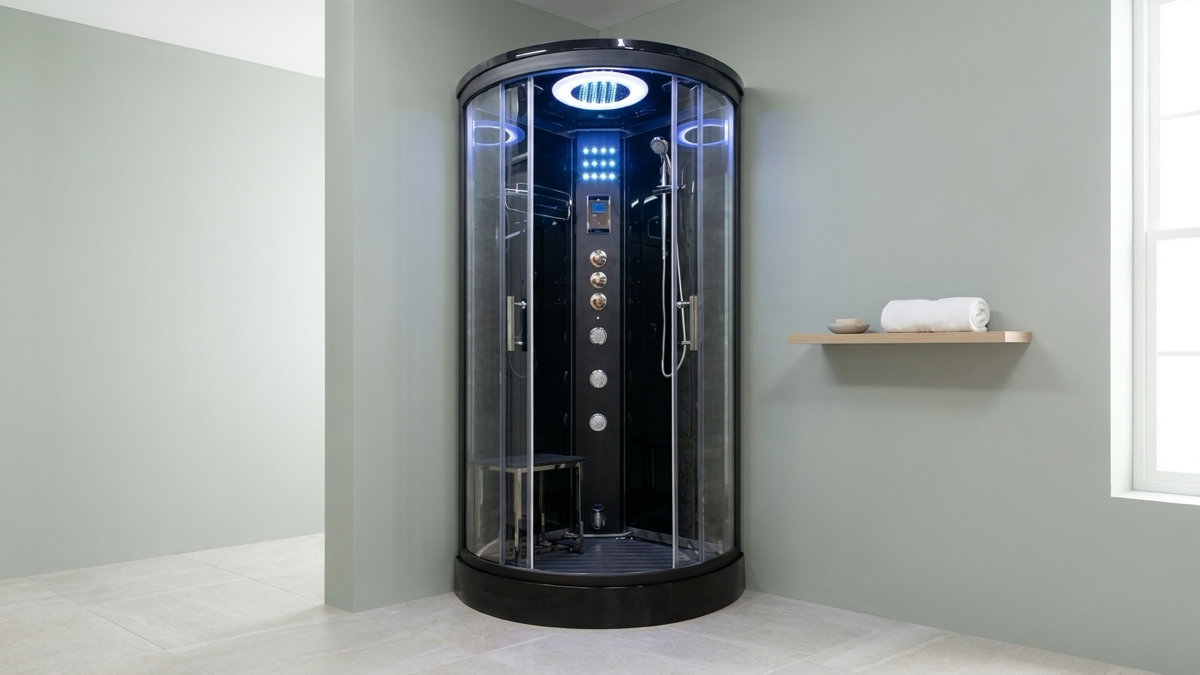
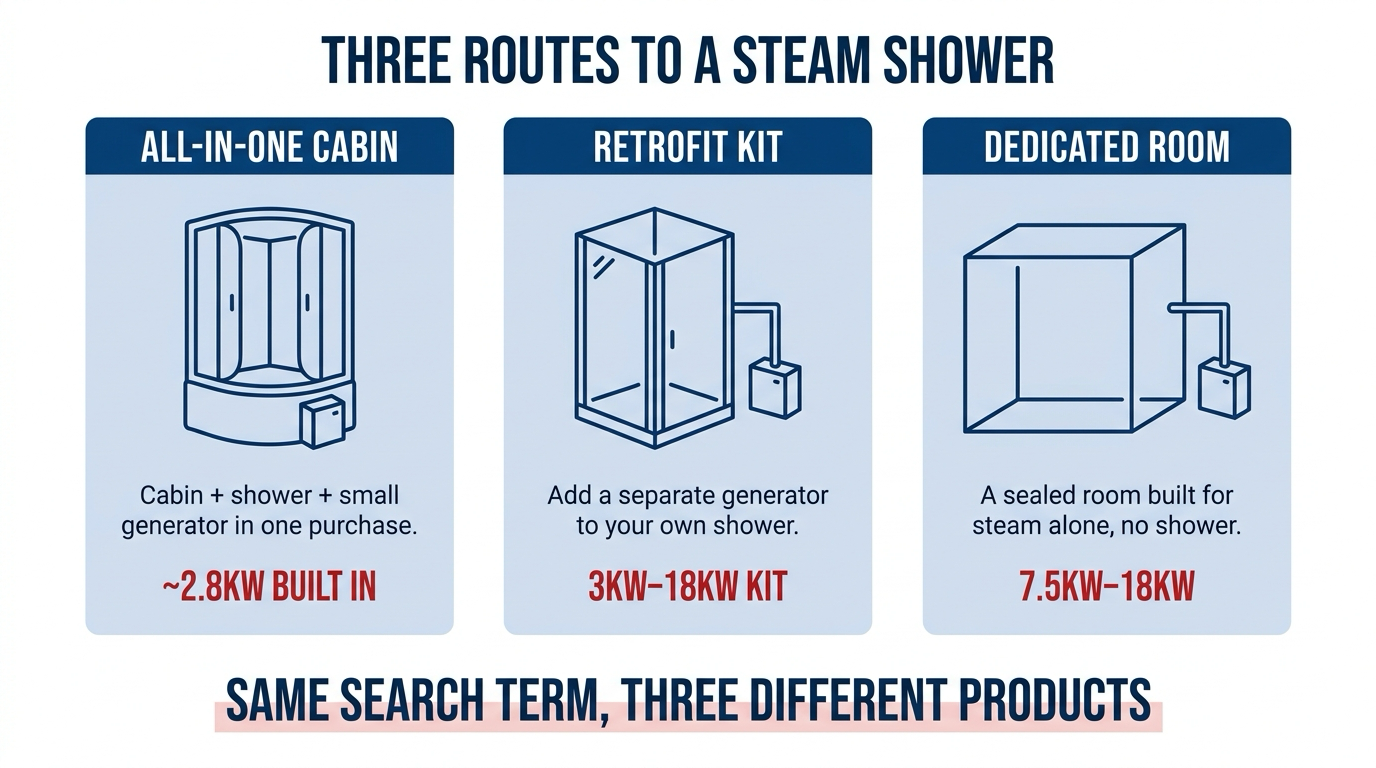
A “shower and steam room combo” usually means one of two things: a factory-built steam shower cabin with its own small generator, or an ordinary shower fitted with a separate steam generator kit. A dedicated steam room is different again… a sealed space built for steam alone, with a larger standalone generator and no shower function needed.
You’ve typed “shower steam room combo” into a search box, and what’s come back is a mixture of steam shower cabins, generator kits and full steam room builds, all fighting for the same three words.
Here’s what each of those actually is, what it needs to work, and which one matches what you’re picturing. We’ll cover the three real routes behind that search term, what the electrics and water side actually require, and what it costs… plus the one mistake that causes more problems than anything else: sizing the generator wrong.
Worth knowing… none of these three is a bad option. They’re just different products, built for different situations.
Option A: an all-in-one steam shower cabin. A factory-built enclosure with its own shower fittings and a smaller generator already built in… one purchase, one footprint, no separate build. As one example from SPW’s own product range, a compact steam shower cabin can run on a generator as small as 2.8kW, sized specifically for that cabin’s own internal volume.
Option B: a shower retrofitted with a separate generator kit. You keep (or fit) an ordinary shower enclosure, then add a standalone steam generator sized to the space. This is a two-part purchase, and the enclosure has to be made steam-proof first.
Option C: a dedicated steam room. Its own sealed space, built specifically for steam, using a heavier-duty generator again… no shower function required at all.
The generator sizes tell the real story here. A cabin’s built-in unit is sized only for its own small footprint, while the retrofit-kit and dedicated-room routes draw from a much wider range… SPW’s own steam room generators run from a 3kW HomeFit unit right up to 18kW for a large dedicated room. Buy for the room you’ve got, not the one in the photo.
If what you actually want is a normal shower that can also fill with steam, without building anything new, this is usually the answer. The cabin, the shower fittings and a generator sized for that one enclosure all arrive as a single product… you’re not sourcing a generator separately or steam-proofing a room yourself.
That convenience is the trade-off worth understanding: the built-in generator is sized for the cabin alone, so it won’t heat a larger space if you ever wanted to expand beyond the cabin’s own footprint. For a straight shower-plus-steam replacement in an existing bathroom, though, it’s the simplest of the three routes.
Quick check before you order: if what you’re picturing is a normal-looking shower you can also steam in, this is your route. SPW’s steam shower cabins cover this exact product category, across several sizes and finishes.
This route suits anyone who already has a shower they like, or is planning a new one, and wants to add steam without buying a whole new cabin. SPW’s own steam-room-generators guidance sets out what’s actually involved.
Sizing first. An existing or new shower under roughly 120 cubic feet suits the smallest 3kW HomeFit generator… SPW’s own sizing calculator will do the length-times-width-times-height maths for your actual enclosure rather than a rough guess.
Q: Can you turn a normal shower into a steam shower? A: Yes, provided it’s already watertight, and you size the generator to the enclosure rather than assuming any kit will do.
Beyond sizing, the enclosure itself needs work before it’s steam-ready:
If you’d rather see how this looks fitted, SPW’s guide on installation tips from the trade covers the practical side in more depth.
This is the heavy-duty route: a separate sealed room, built for steam alone, with no shower function needed. It suits anyone converting a spare room, or building steam into a larger bathroom reshape, rather than adding it to an existing shower.
The generators here scale with the room, not the cabin. SPW’s heavy-duty tier, sold under Insignia’s Signature Steam Generators name, runs 7.5kW to 18kW, each rated to a cubic-foot capacity band. As a working example: at a 7ft ceiling height, a 12kW model suits a room of roughly 10ft × 7ft. A floor drain is required throughout, since condensation and moisture will accumulate whether or not there’s a shower running.
One thing to measure first: bigger isn’t automatically safer here. A generator oversized for the room is exactly as ineffective as one that’s too small… match the kW rating to the cubic footage, not the biggest number on the page.
If you’re planning the physical build rather than just the generator, SPW’s guide on building your own steam room walks through the practical side of turning a spare room into a sealed steam space.
This is the section that decides whether either of the retrofit or dedicated-room routes is realistic for your home before you get much further.
Electrics. Every steam room generator SPW stocks, at any kW rating, needs its own dedicated, hard-wired electrical circuit… not a standard socket, and not a shared shower circuit. Sizing that circuit correctly, and confirming your consumer unit can take it, is a qualified electrician’s job, not a DIY one. Per Electrical Safety First, electrical work like this falls under Part P of the Building Regulations, and should go through a competent, registered electrician who can confirm what your particular installation needs.
Water. Steam generators need real working pressure to function, not just a working tap. Most residential generators need a minimum of 0.5 to 1.0 bar to trigger their internal solenoid valve correctly… a standard gravity-fed tank, which typically supplies only 0.3 to 0.5 bar, often isn’t enough on its own. Worth checking your home’s water pressure before you commit to a generator size, particularly in an older property with a header tank rather than a pressurised supply.
According to Checkatrade’s cost guide, a ready-made steam room unit typically runs £800–£3,500 for the unit itself, plus £3,000–£5,000 for installation, depending on where you’re based (prices tend to run higher in London and the South East). A steam shower, materials and installation together, is more often £1,500–£5,000. Retrofitting a generator kit into an existing shower is usually the cheaper of the three routes, since you’re not building a new enclosure from scratch; a dedicated steam room build costs the most, because you’re building the room as well as fitting the generator.
The single mistake that causes the most problems, across all three routes, is guessing the generator size instead of measuring. Too small, and the generator can’t keep up with the space… it never steams properly. Too large for the room, and it’s just as ineffective, not safer or faster. Measure twice, order once, and use SPW’s sizing calculator rather than a rough estimate.
Q: Are steam shower cabins any good?
A: Steam shower cabins are a different product to a full steam room: an enclosed cabin with a smaller generator built in, giving you a steam session and a normal shower in one footprint. They suit space-limited bathrooms better than a dedicated steam room, which needs its own sealed space.
Q: Is there a shower with sauna combo available?
A: No… SPW doesn’t stock saunas. A sauna uses dry heat and no water; a steam room or steam shower uses wet, humid steam from a generator, and needs different materials and drainage. If you’re after the steam route, that’s exactly what this guide covers.
Q: How much does it cost to add a steam room to a shower?
A: According to Checkatrade’s cost guide, a ready-made steam room unit typically costs £800–£3,500 for the unit plus £3,000–£5,000 to install, while retrofitting steam into an existing shower is usually cheaper than building a dedicated room from scratch. Get a fitted quote before you commit to a generator size.
Q: Are steam showers worth it?
A: That depends on how you’ll use it. A steam shower cabin gives you a genuine spa-style session without a dedicated room, in the footprint you already have; a full steam room is the bigger commitment but the closer-to-spa experience. Either way, size the generator to the space, not the budget.
Q: What are the downsides of installing a steam shower?
A: Every steam generator needs its own dedicated, hard-wired electrical circuit, sized by a qualified electrician… not something you can DIY. The enclosure has to be properly sealed and steam-proofed, and an undersized or oversized generator is as much a problem as no generator at all.
Q: Which brand of steam shower is best?
A: There isn’t one answer… it depends on your footprint, budget and the features you want. SPW stocks steam showers and steam room generators across several ranges, including Vidalux, Insignia and Lisna Waters, each with its own sizes and specs. Compare on the actual numbers, not the badge.
Q: Do steam showers use a lot of electricity?
A: A steam generator only draws its full power while it’s heating up and topping up steam, not constantly. SPW’s steam room generator kits range from a 3kW HomeFit unit for a small shower conversion up to 18kW for a large dedicated steam room, so the real draw depends on size.
Q: Can you turn a normal shower into a steam shower?
A: Yes, provided the shower is already watertight. You’ll need to make the enclosure fully steam-proof (sealed, non-porous walls and ceiling) and fit a steam generator sized to the internal cubic footage… SPW’s smallest kit suits enclosures under about 120 cubic feet.
Whichever of the three you’re actually after, the next step is the same: look at real sizes and generator ratings rather than the search term that brought you here. SPW’s steam room generators page carries the full current range, sizing notes and accessories for both the retrofit and dedicated-room routes.